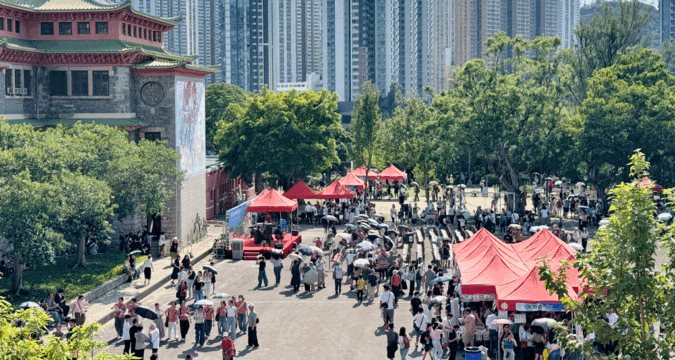
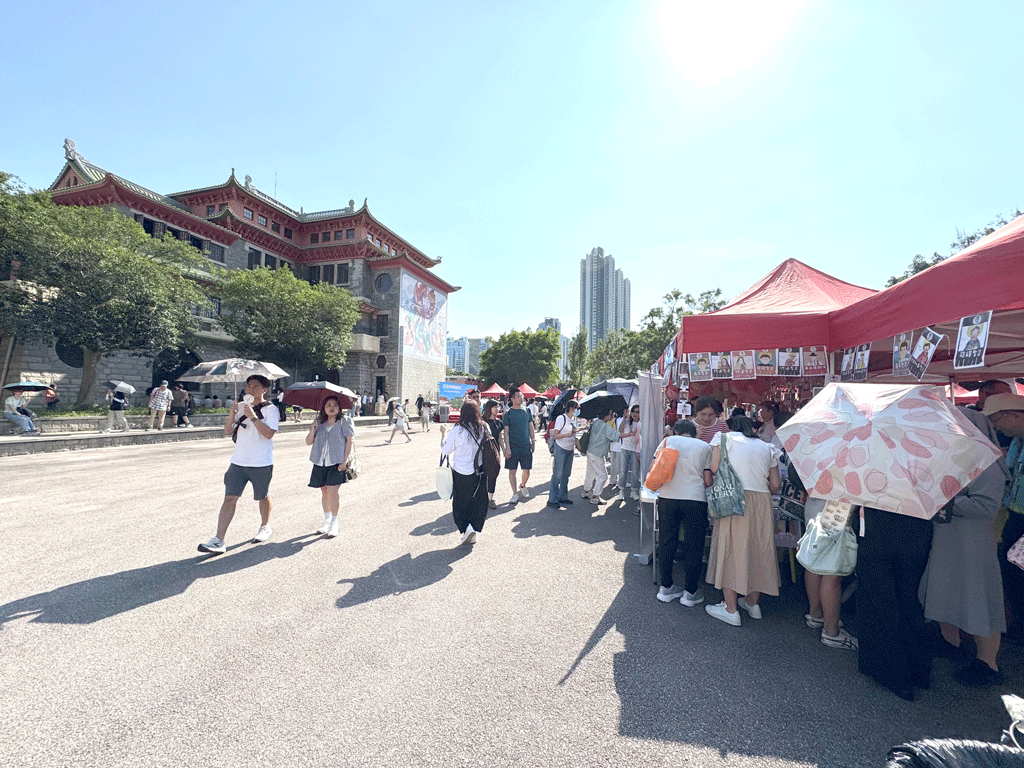
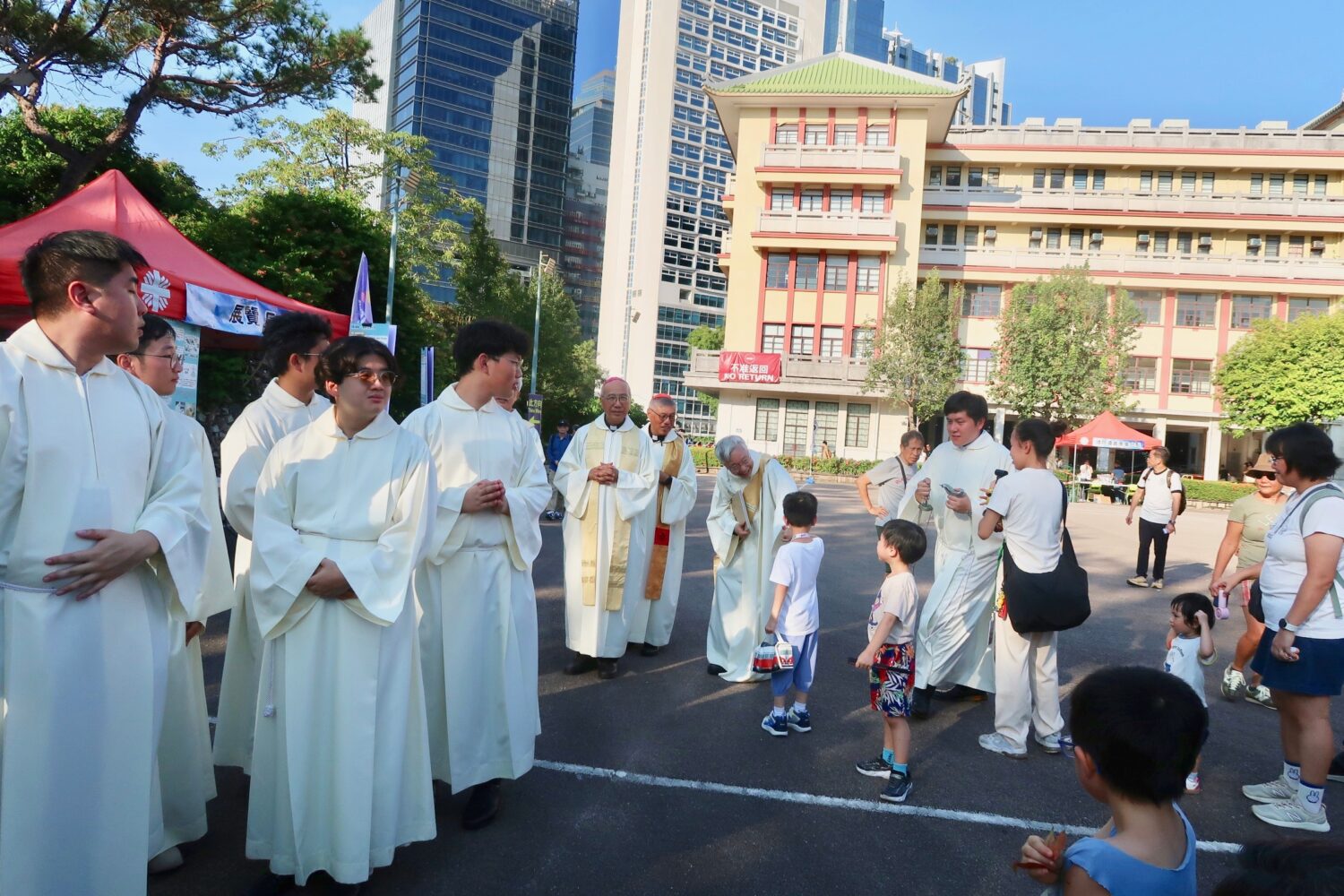
HONG KONG (SE): Holy Spirit Seminary in Wong Chuk Hang opened its doors to the public on October 1 for a special open day. It drew more than 8,200 visitors, all eager for a rare look inside its normally secluded grounds. The event marked a triple milestone: the 80th anniversary of the Catholic Diocese of Hong Kong, the 95th anniversary of Holy Spirit Seminary, and the 55th anniversary of the Holy Spirit Seminary College of Theology and Philosophy.
The day began with the Morning Prayer from the Liturgy of the Hours in the chapel. This gave visitors a glimpse of the daily prayer at the heart of priestly formation. Although storms had been forecast the week before, the day turned out sunny and hot.
Cardinal Stephen Chow, S.J., and the rector of the seminary, Auxiliary Bishop Joseph Ha Chi-shing, then led the opening ceremony. Cardinal Stephen welcomed all the visitors, especially non-Christians who had come despite the heat. He invited them to pray for priests, seminarians, professors, and students.
Bishop Ha spoke of the seminary’s mission to form young men as diocesan priests, and of the college’s 55-year legacy of forming lay leaders. He urged visitors to see God at work as he calls his people to serve the Church and society in Hong Kong.
The cardinal and Bishop Ha, joined by representatives of the seminarians, professors, and students, then opened the day by popping celebratory balloons. The gesture symbolised joy, hope, and the desire to share the gospel widely.
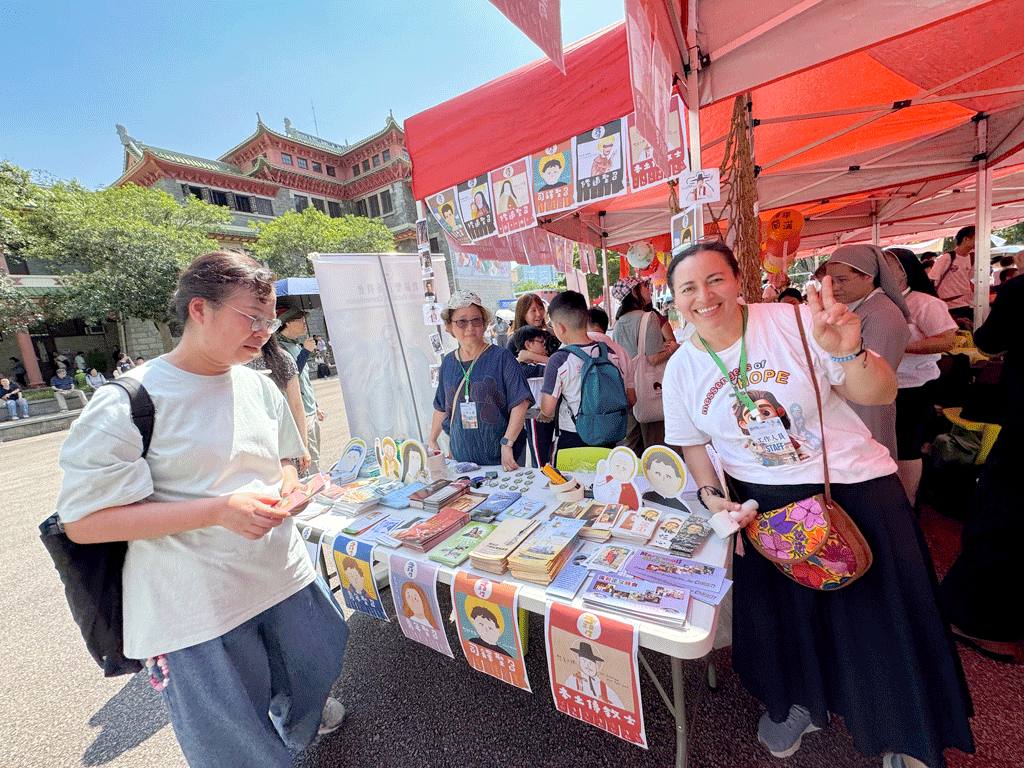
Activities included game stalls run by the Diocesan Vocation Commission and parishes, a stamp collection trail with commemorative prizes, and stage performances by local schools and music groups. Maryknoll Sister Norma Pocasangre of the Vocation Commission introduced different religious institutes at the commission’s booth with other sisters and volunteers. She said it attracted a wide range of visitors, including non-Catholics and students.
Visitors also toured five fixed themed exhibitions staffed by volunteer guides, covering the seminary’s history, its architectural heritage, seminarian formation, the college’s development, and the institution’s ties with society.
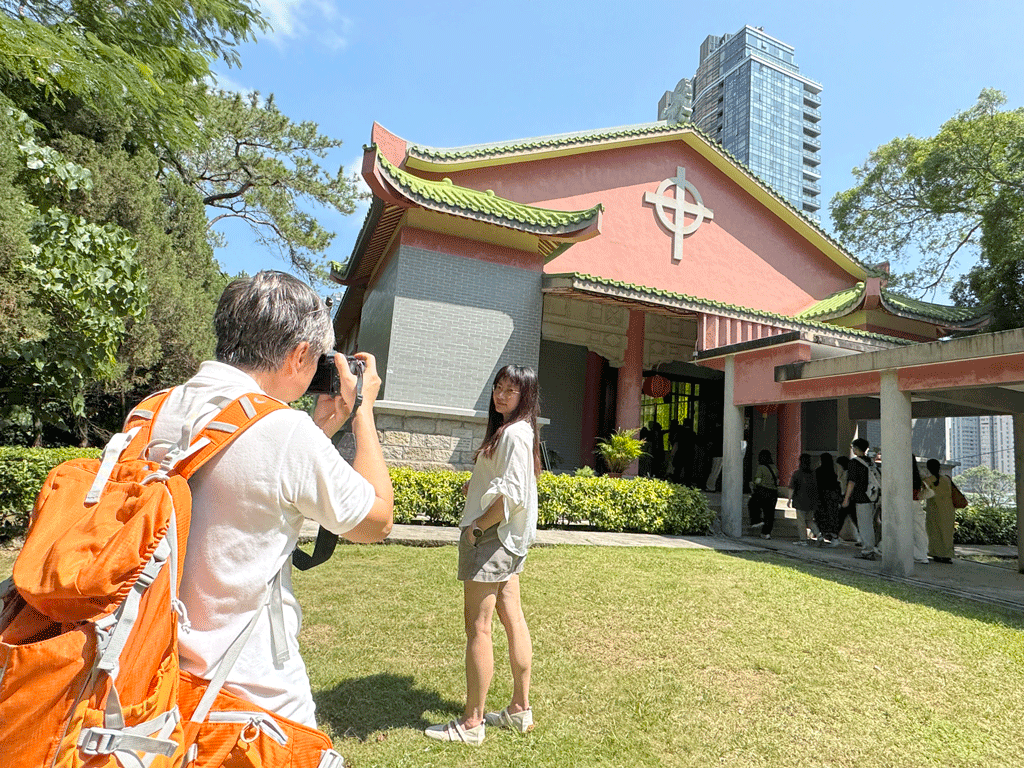
The seminary was founded as the South China Regional Seminary. It was one of 14 regional seminaries planned at the first Plenary Council of China, convened in Shanghai in 1924 by Archbishop Celso Costantini, the first apostolic delegate to China. Its foundation stone was laid on 3 October 1930, with funds from Pope Pius XI, and it opened the following year to train seminarians from more than 10 vicariates apostolic in Guangdong and Fujian. During the war, the seminarians took refuge in Macau, and the seminary reopened in 1945.
In 1964, the Holy See handed the site to the Diocese of Hong Kong. The building is often cited as a leading example of Hong Kong’s Chinese-style churches of the 1930s.
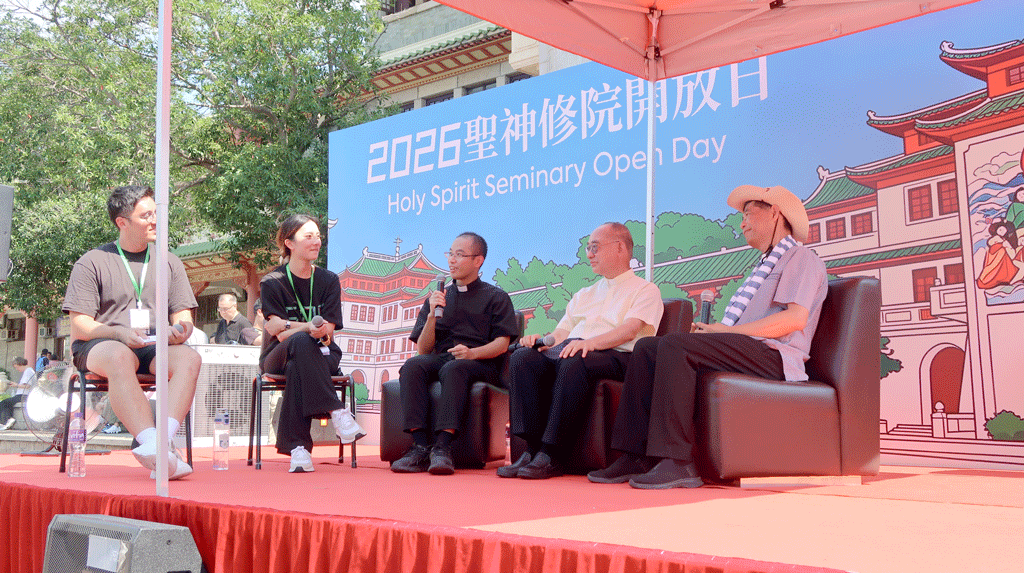
In sharing sessions, clergy of different generations spoke about their vocations and their time in the seminary. Father Joseph Yim Tak-lung stressed that priests are pastoral servants, not employees. He recommended humour, exercise, forgiveness, and quiet rest to balance a demanding life. Vicar general, Father Paul Kam Po-wai, fondly recalled the signature barbecued pork of a former seminary cook. He described taking a “coffee me-time” for reflection amid busy parish duties.
Father Dominic Chan Chi-ming spoke of finding inner calm through focused activities such as tai chi and cooking, and stressed the importance of rhythm, punctuality, and rest. Father Joseph Lin Ruoqi explained how daily prayer, Eucharistic Adoration, and praying the Liturgy of the Hours seven times a day sanctify his daily work.
A major academic highlight was a series of trial classes in theology and philosophy led by priests and professors. They offered accessible introductions to scripture, basic theology, and modern ethics, giving participants a taste of seminarians’ intellectual and spiritual formation.
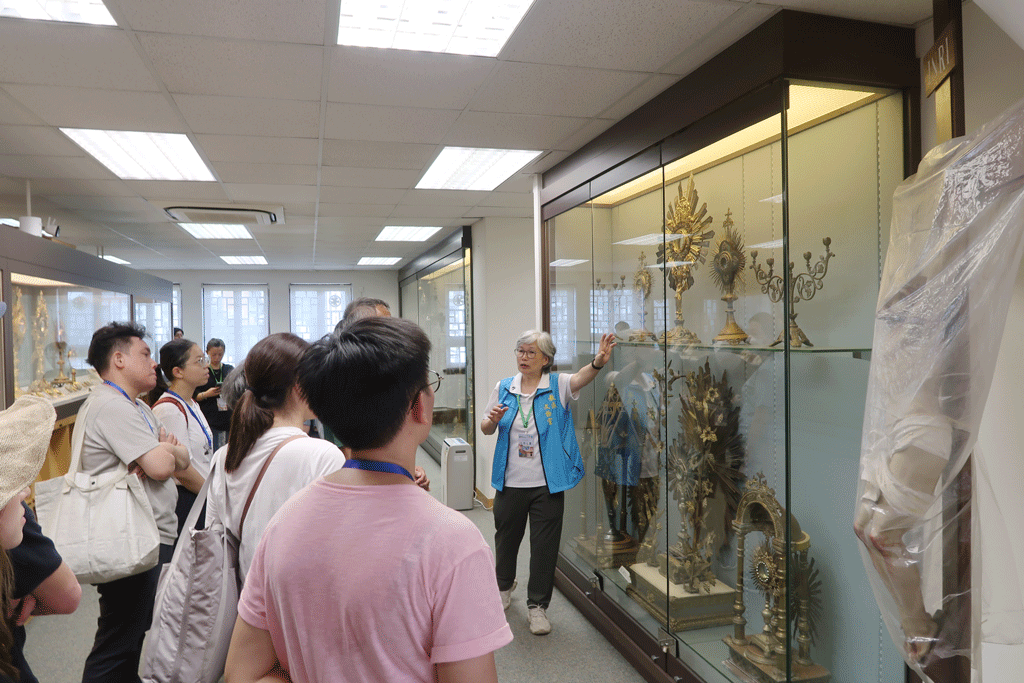
The artefacts room was another highlight. On display were rare heritage items, including pre-Vatican II liturgical objects and the vestments worn by Pope St. Paul VI during his 1970 visit to Hong Kong—still the only papal visit to the city.
Christine Leung, a non-Christian architecture enthusiast, praised the rare chance to see the building’s blend of Chinese design within a Western structure. She noted, however, that the guided tour felt somewhat rushed. Another visitor, Eliza Chan, was grateful to see areas that are usually closed to the public, although she found the heat hard to bear during the outdoor talks.
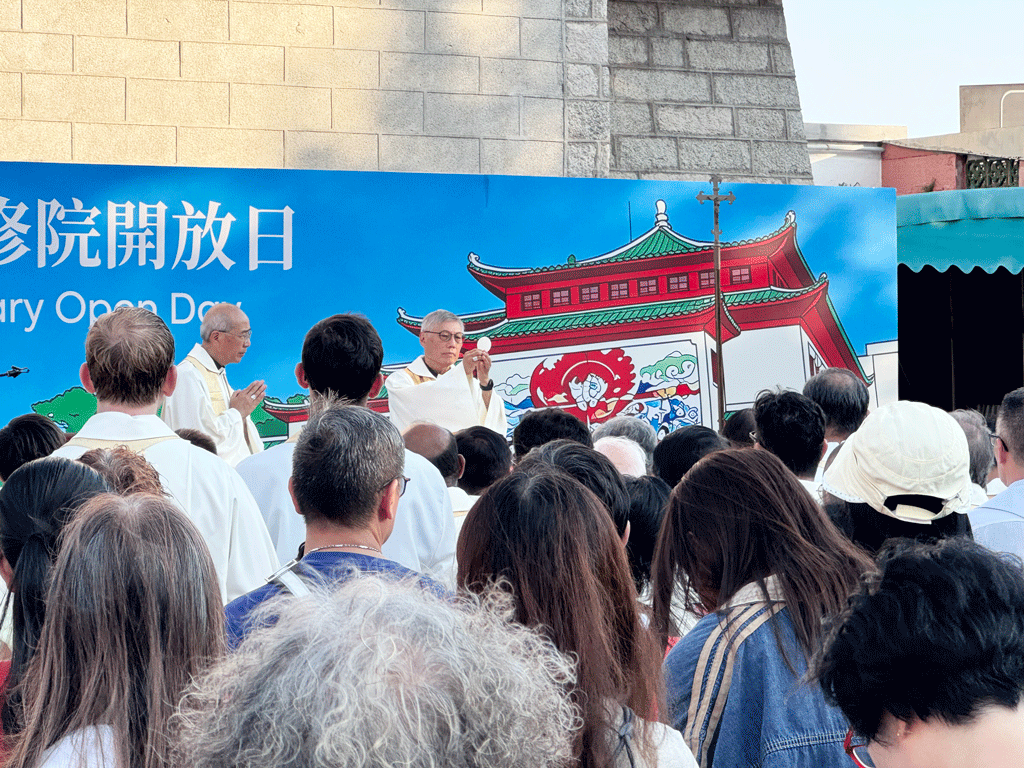
The day ended with a solemn closing Mass at 4.30pm, concelebrated by Cardinal Stephen, Bishop Ha, and nearly 40 priests. In his homily, Cardinal Stephen cited St. Thérèse of Lisieux and her “Little Way,” reminding the faithful that God often chooses imperfect people so that his glory may shine through their weakness. He encouraged everyone, even those who feel like a “small potato,” to give themselves to God’s call, whether to holy orders, religious life, or lay ministry.
As the open day coincided with the National Day, Cardinal Stephen also led prayers in Putonghua for people’s well-being and dignity, and for the country’s role as a peacemaker in the world.
At the end of Mass, Bishop Ha thanked the organisers, volunteers, stall operators, and visitors. He said their combined efforts and the large turnout were a powerful testimony to God’s grace and love for the Church and society in Hong Kong.